Location: Naples (NA)
Year: 2025
Category: architecture
Type: residential
Private customer
Status: in progress
Area: 90 sqm
An architecture that does not impose itself on the landscape, but bends it, absorbs it, and extends it.
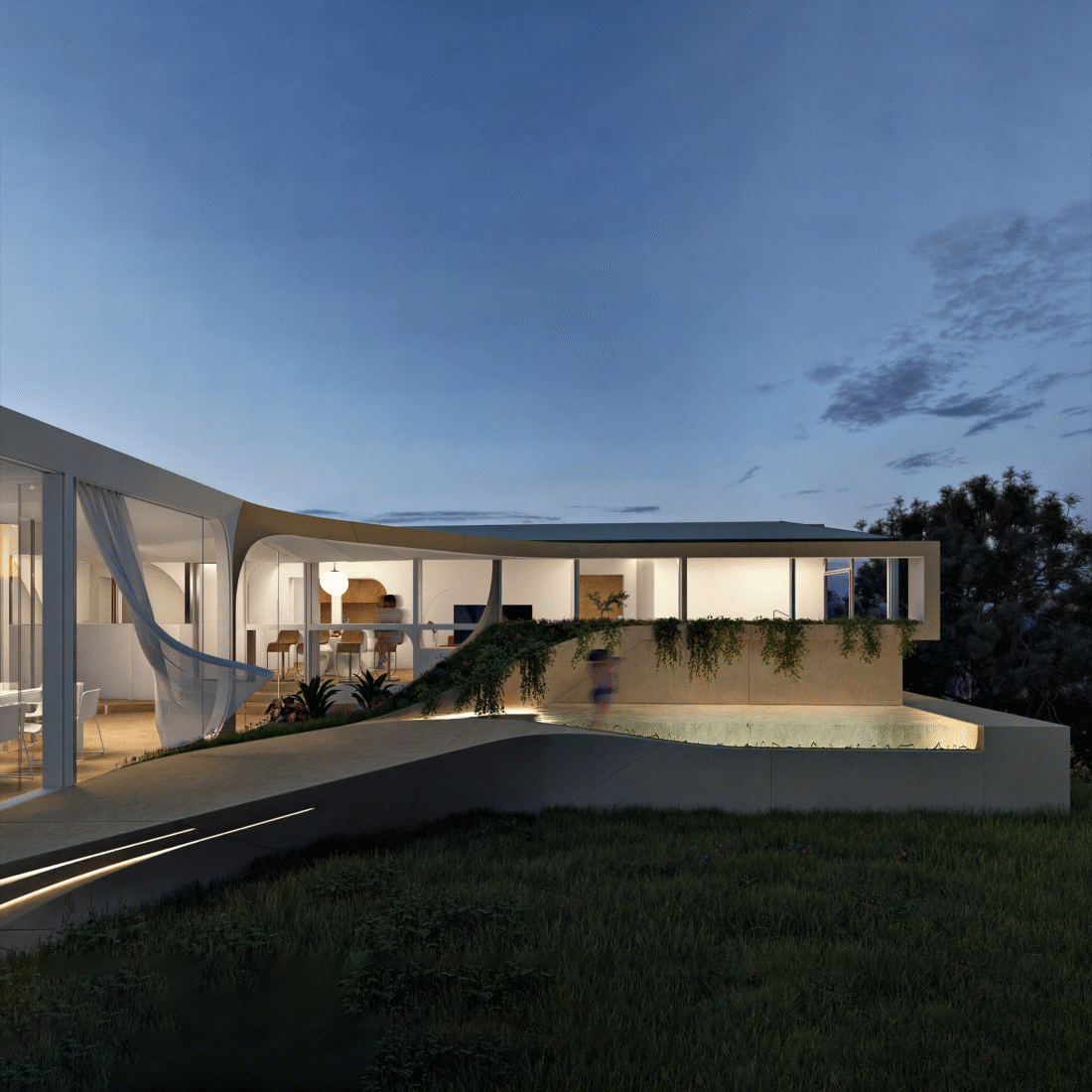
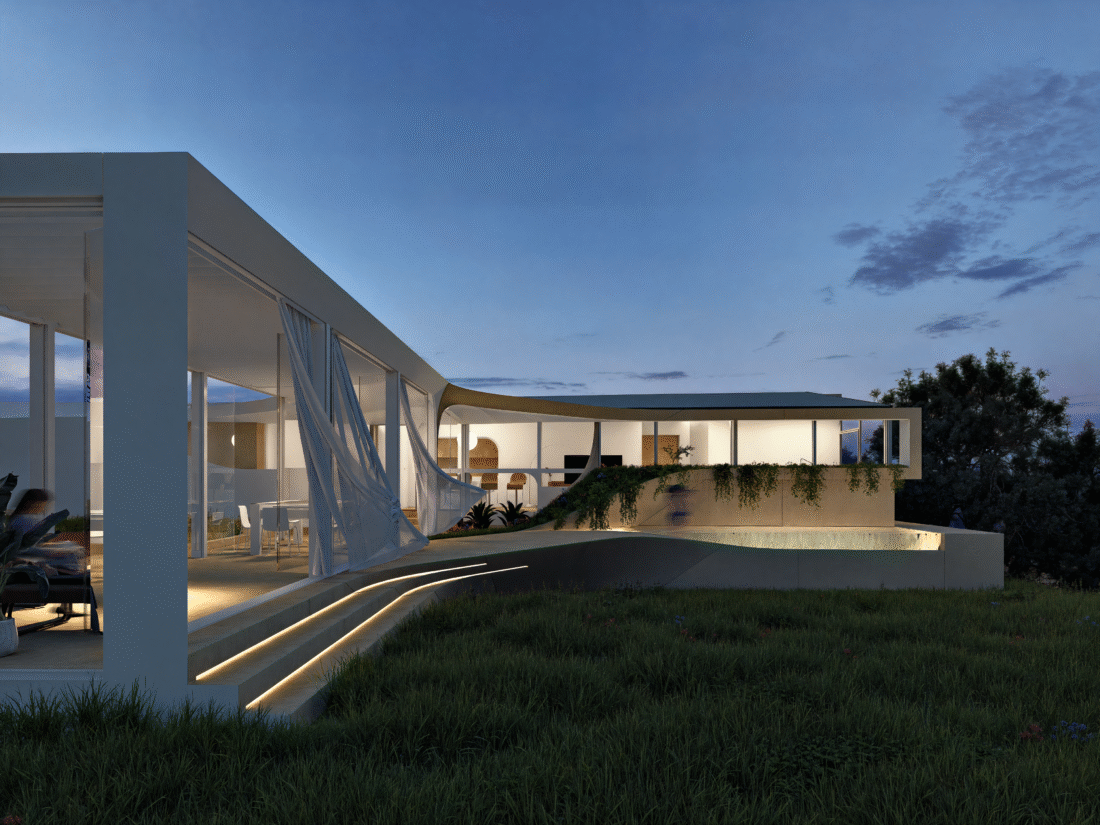
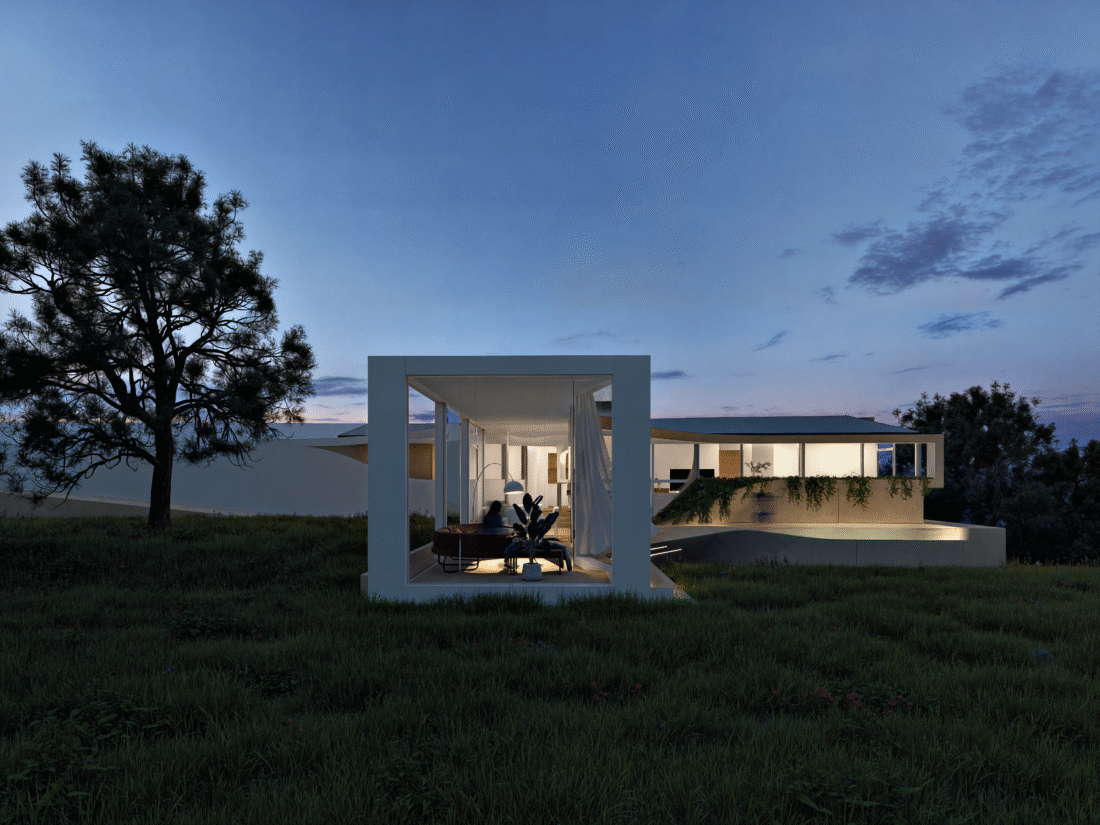
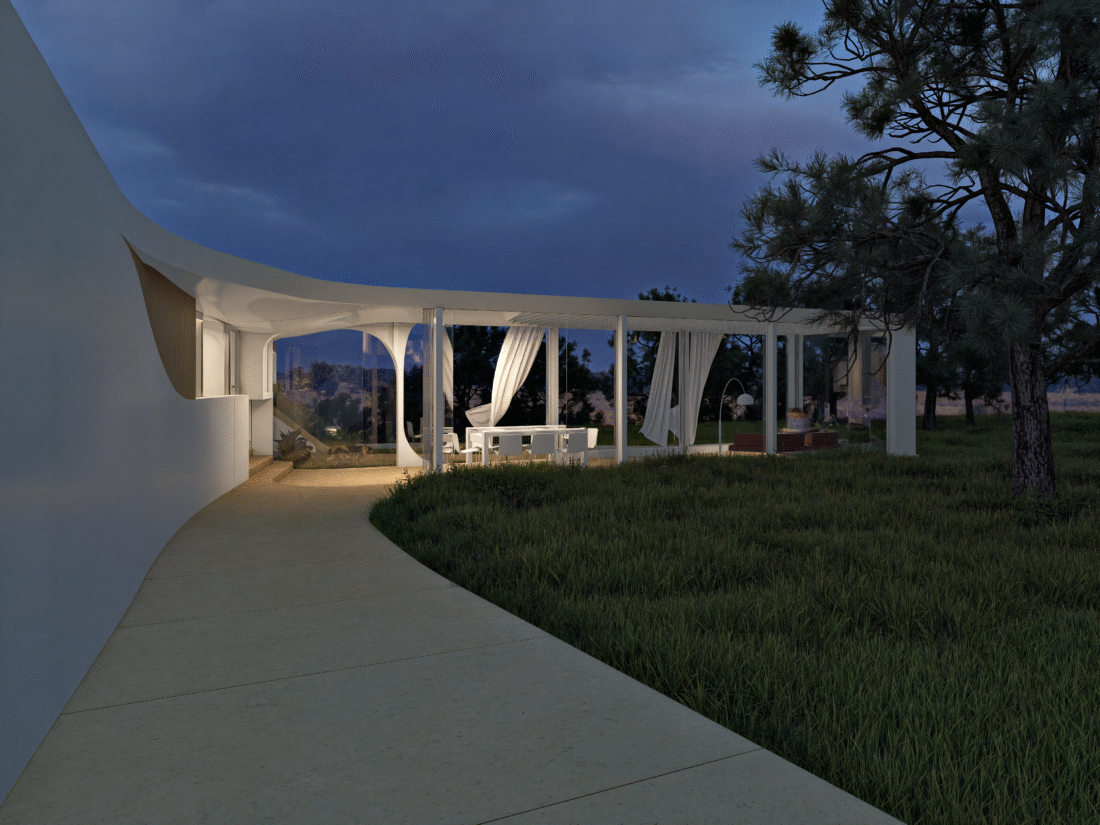
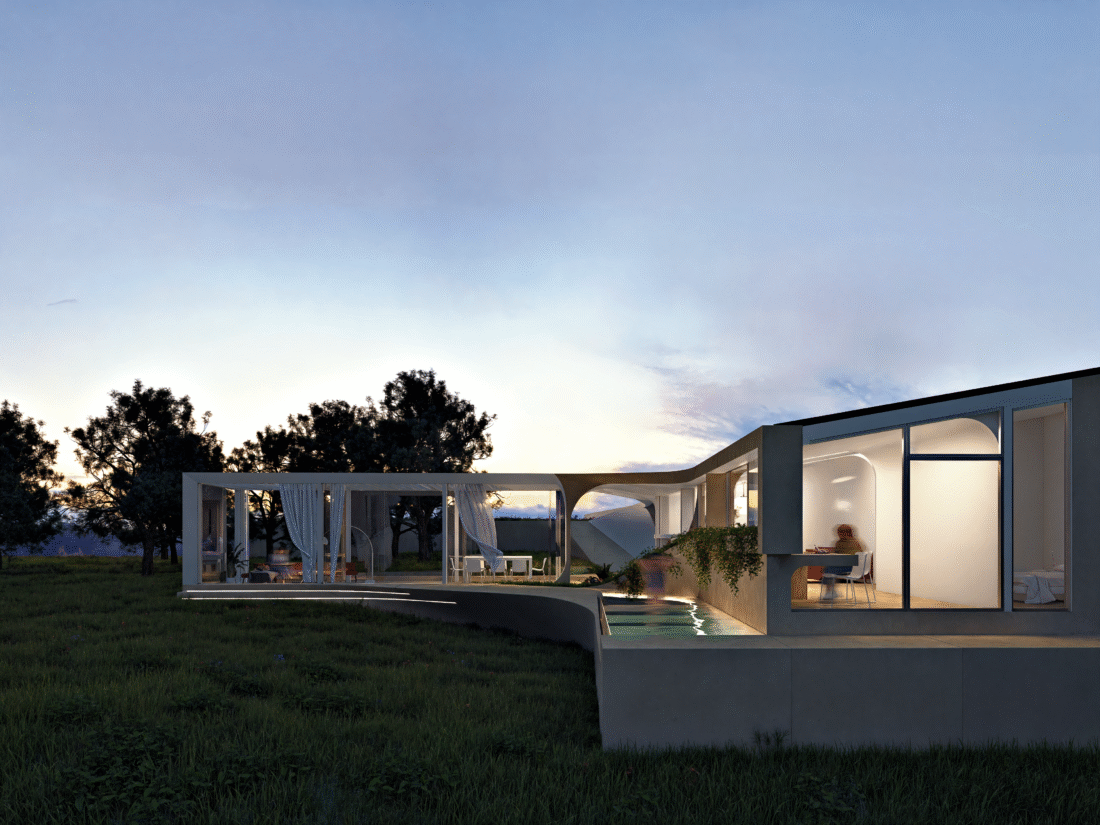
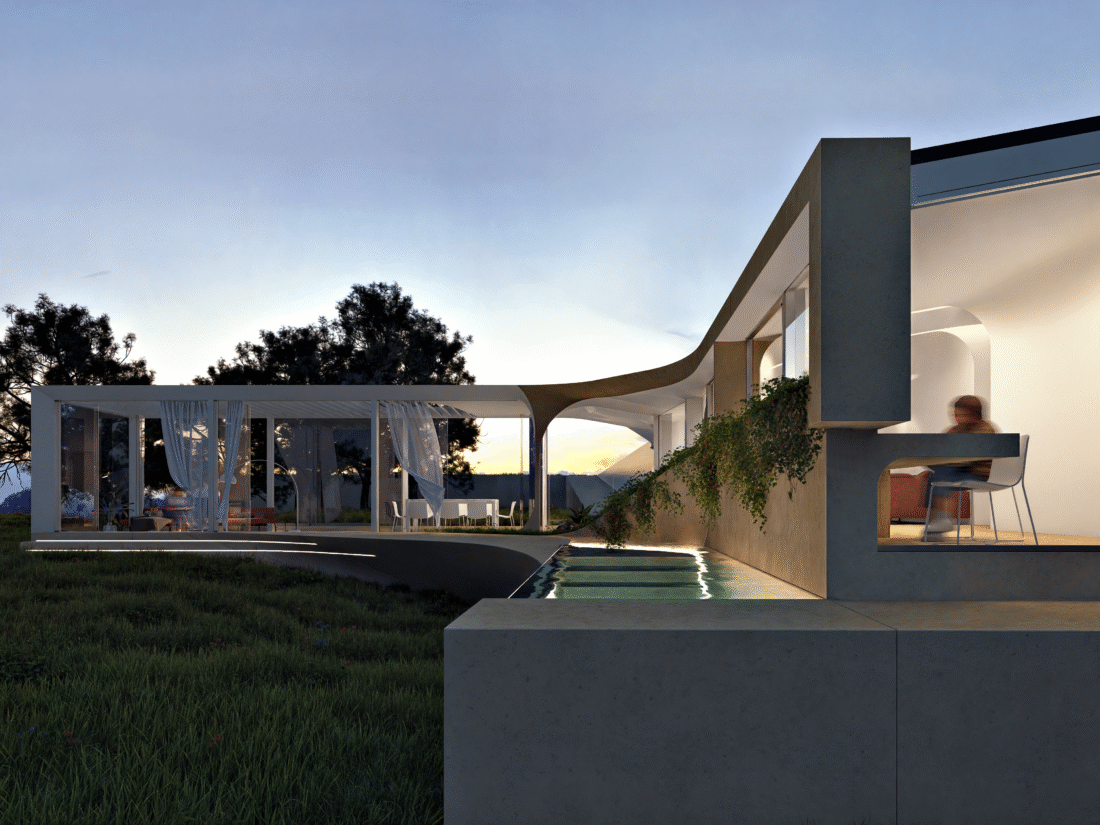
The project originates from the idea of dissolving the distinction between ground and built form, transforming the building into an inhabitable fold of the terrain. A soft, continuous line defines the entire architectural organism: roof, wall, and exterior space merge into a single plastic gesture, generating a fluid system in which interior and exterior interpenetrate seamlessly.
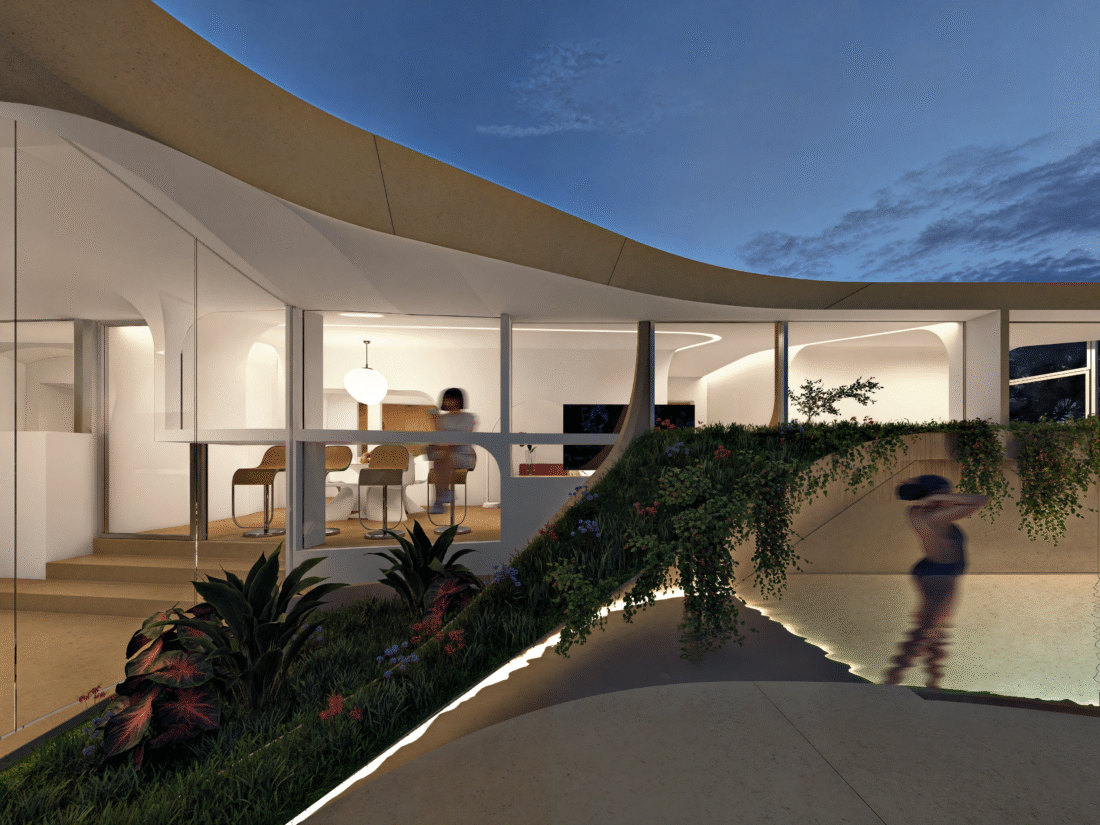
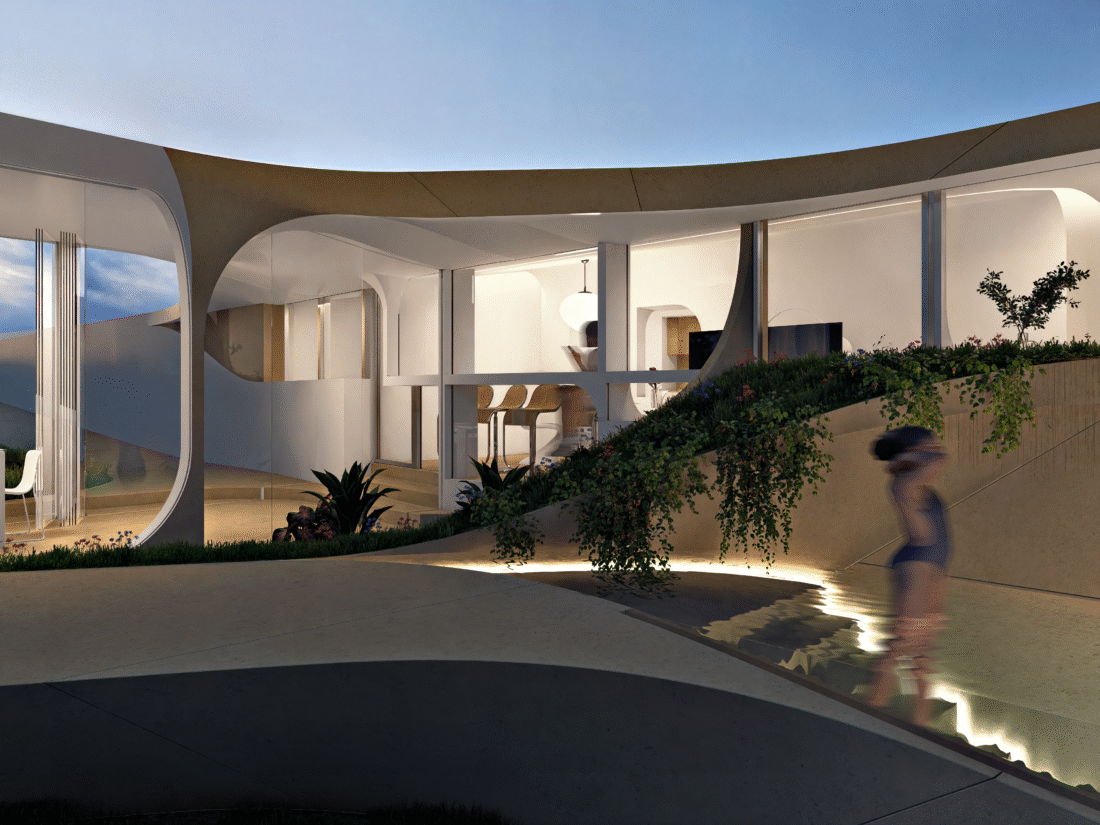
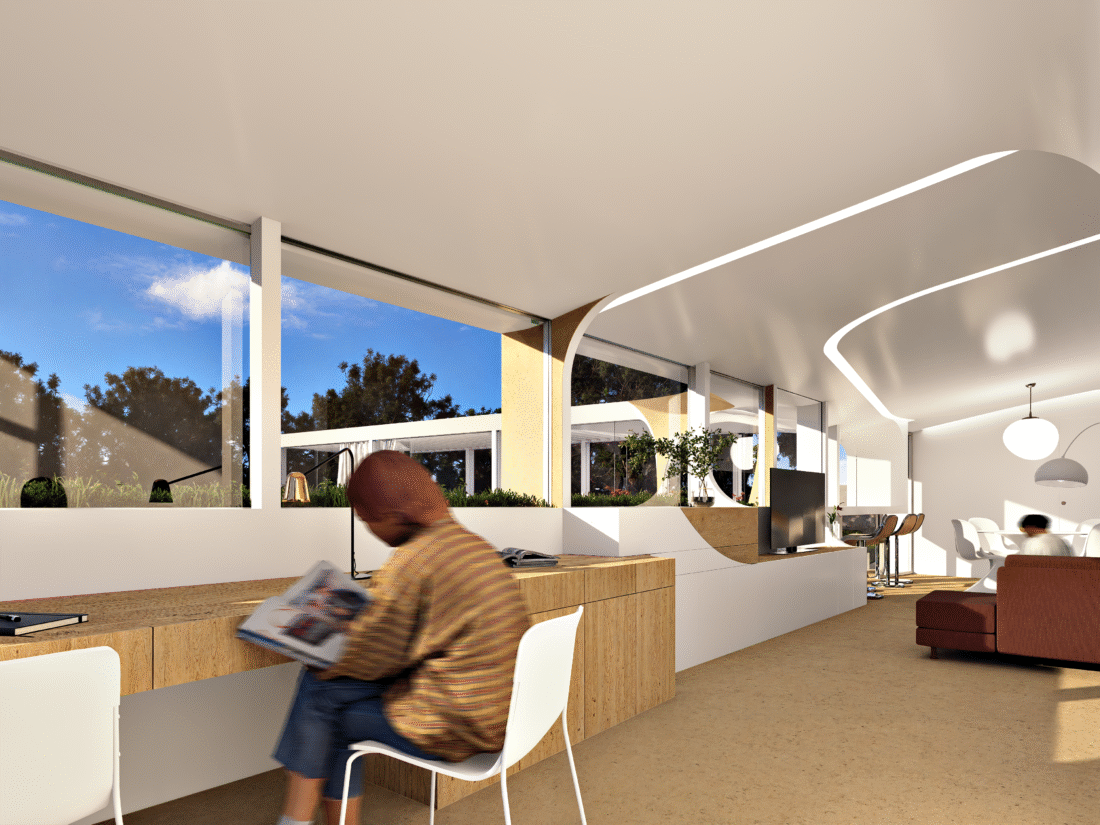
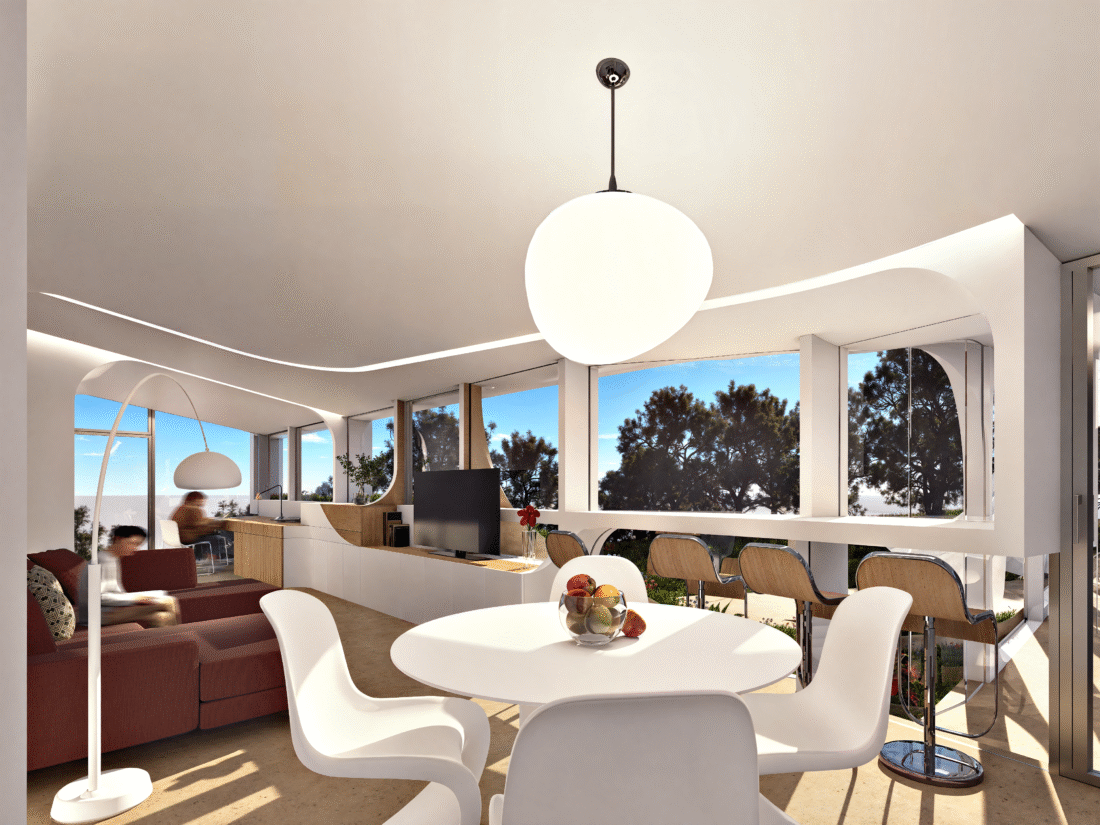
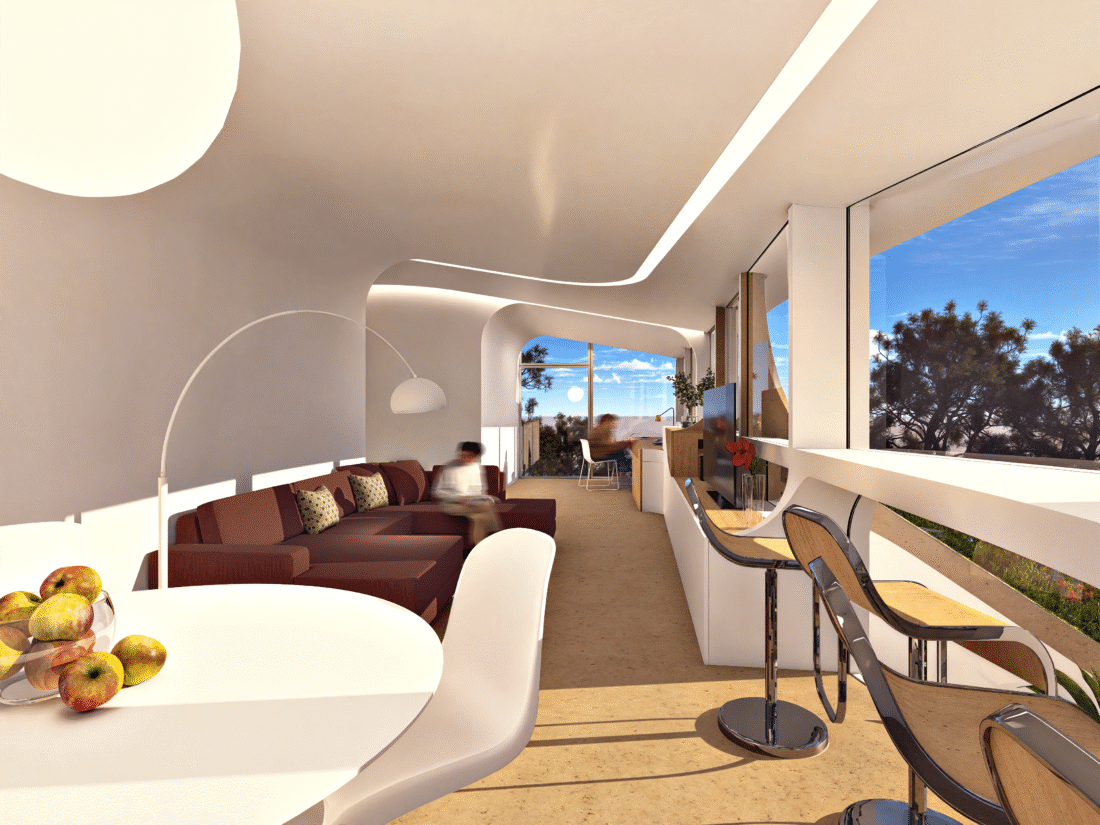
The house unfolds as a sequence of permeable spaces, fully open to the landscape, where large glazed surfaces dissolve visual boundaries and establish a direct relationship with light, vegetation, and water. The central patio, carved into the volume, becomes the spatial and climatic core of the project: a reflective water basin introduces a mitigated microclimate, while planted surfaces contribute to regulating temperature and humidity, reinforcing the bioclimatic dimension of the intervention.
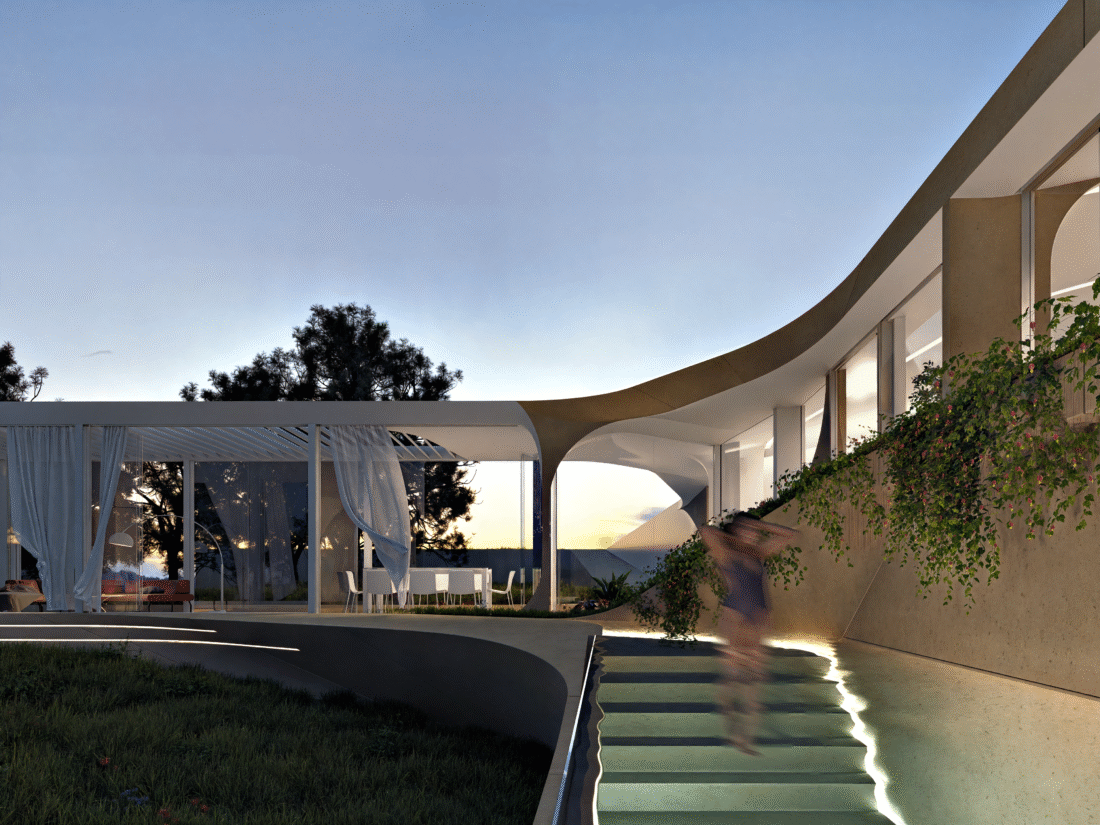
Circulation is not organized through linear paths, but through an artificial topography of ramps, slopes, and material continuity that guide the movement of the body through space. The architecture is not simply traversed, but experienced as a continuous spatial field, where every change in level generates new visual and spatial relationships.
From a material standpoint, the project operates through reduction and continuity: neutral, mineral surfaces host the grafting of vegetation that cascades from the edges, colonizes thresholds, and transforms the envelope into a living device. Artificial lighting, discreetly integrated into the architectural lines, enhances the plasticity of the forms and, during the evening hours, conveys a suspended and rarefied image of the building.
More than an object, this architecture presents itself as an inhabited landscape: a hybrid system in which construction and nature coexist in a relationship of mutual transformation, suggesting a way of dwelling in which design does not merely occupy the ground, but becomes its active and sensitive extension.